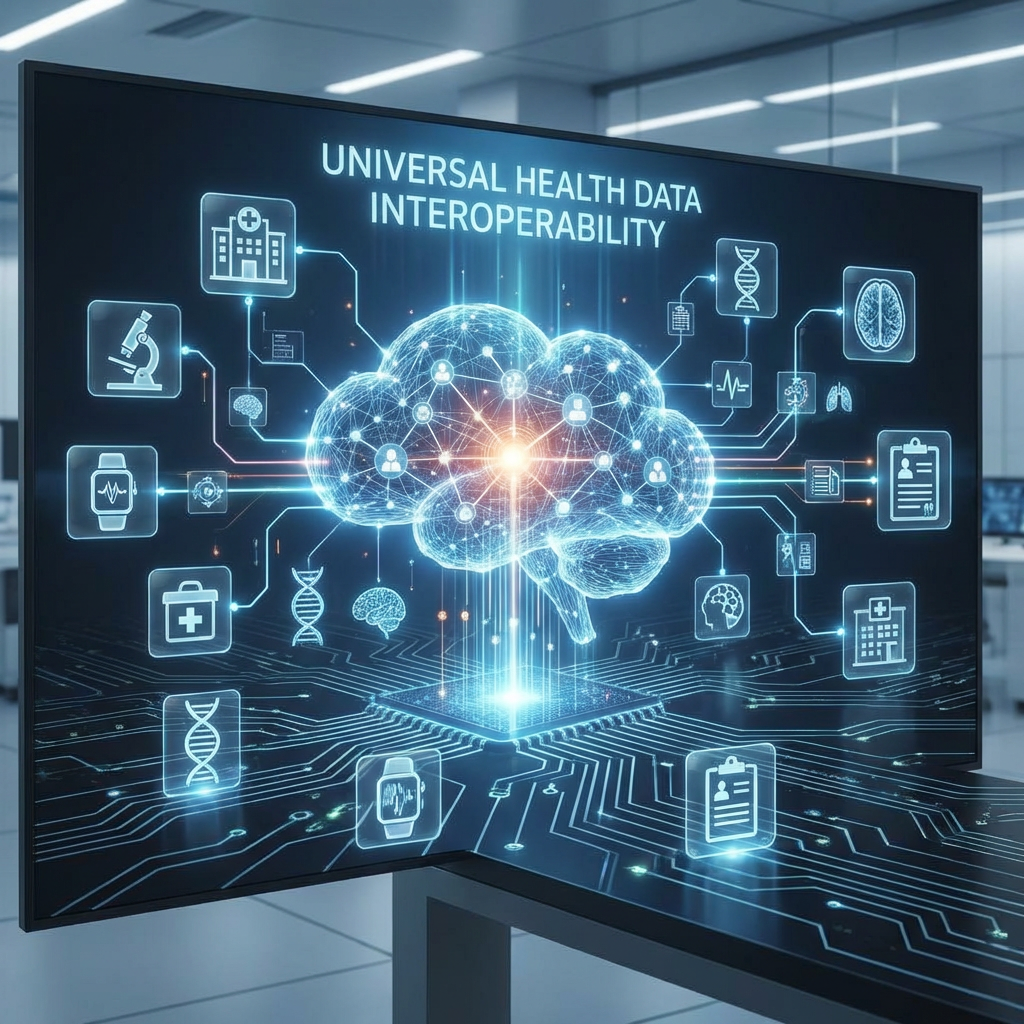
Healthcare systems have historically evolved as fragmented ecosystems. Laboratory information systems, radiology platforms, electronic health records (EHR), and administrative databases are often developed independently, each optimised for local functionality rather than system-wide integration. While this modular evolution reflects practical constraints, it has led to a pervasive issue: data silos.
Data silos are not merely an inconvenience—they represent a systemic inefficiency that directly affects clinical outcomes. When patient data is dispersed across unconnected systems, clinicians are forced to operate with incomplete information. This can result in duplicated tests, delayed diagnoses, inconsistent treatment decisions, and increased administrative overhead. From an engineering standpoint, this is a failure of system integration rather than a lack of data availability.
Interoperability addresses this fundamental issue. It refers to the ability of different healthcare systems to exchange, interpret, and utilise data in a meaningful way. However, interoperability is often misunderstood as simple data transfer. In reality, it operates across multiple layers.
At the most basic level, foundational interoperability enables systems to exchange data. Structural interoperability ensures that data is formatted consistently so it can be parsed correctly. The most advanced level, semantic interoperability, ensures that the meaning of the data is preserved across systems. This is critical in healthcare, where misinterpretation can have serious clinical consequences.
Standards such as HL7 and FHIR play a central role in enabling interoperability. HL7 has long been used for messaging between systems, particularly in hospital environments. However, it is often rigid and requires significant customisation. FHIR, in contrast, is designed for modern, API-driven ecosystems. Its modular structure allows for flexible data exchange and easier integration with applications, making it highly relevant for contemporary digital health solutions.
The operational benefits of interoperability are substantial. It enables integrated patient records across care settings, reduces duplication, supports real-time decision-making, and enhances care coordination. For healthcare organisations, this translates into improved efficiency, reduced costs, and better patient outcomes.
Moreover, interoperability is a prerequisite for advanced technologies such as artificial intelligence and predictive analytics. AI systems rely on high-quality, integrated datasets. Without interoperability, these systems cannot access the breadth and depth of data required for reliable performance.
Despite its importance, achieving interoperability remains challenging. Legacy systems, inconsistent data standards, governance constraints, and vendor fragmentation all contribute to the difficulty. Addressing these challenges requires not only technical solutions but also organisational alignment and regulatory support.
Looking forward, interoperability will become increasingly central to healthcare innovation. As systems become more connected, the focus will shift from isolated optimisation to system-wide intelligence. In this context, interoperability is not merely a technical capability—it is the foundation of modern healthcare infrastructure.


Leave a Reply