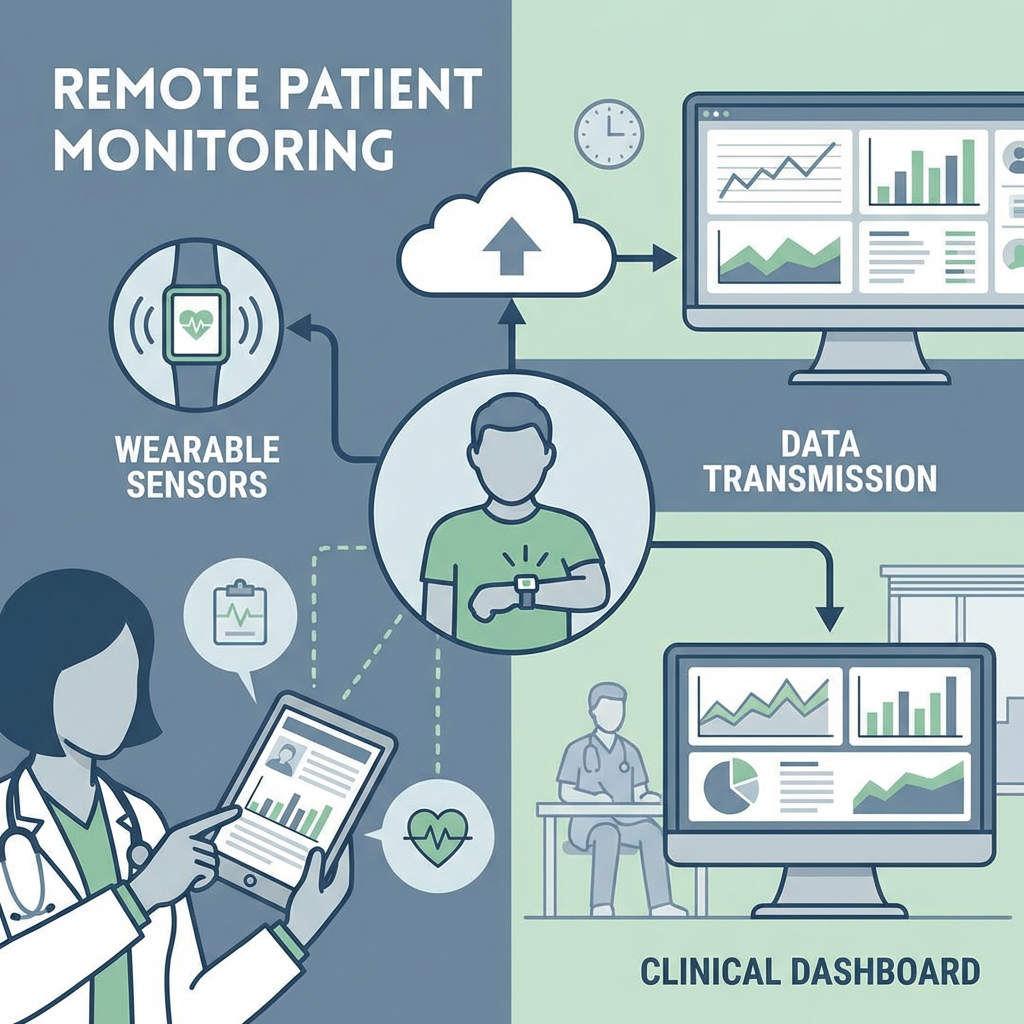
Remote patient monitoring (RPM) has gained significant attention as a means of extending healthcare beyond traditional clinical settings. By leveraging wearable devices and connected technologies, RPM enables continuous monitoring of patient health in real time.
The potential benefits of RPM are considerable. It allows for early detection of health issues, reduces hospital admissions, and supports chronic disease management. For patients, it offers greater convenience and a more active role in their own care.
From a system perspective, RPM can improve resource utilisation by reducing the burden on hospitals and clinics. It also enables more targeted interventions, as clinicians can identify and prioritise patients who require immediate attention.
However, the implementation of RPM is not without challenges. One of the primary issues is data management. Continuous monitoring generates large volumes of data, which must be processed, analysed, and interpreted. Without effective systems in place, this can lead to information overload.
Another challenge is data quality. Wearable devices may produce inaccurate or inconsistent data, particularly in uncontrolled environments. This can affect the reliability of clinical decisions based on RPM data.
Patient engagement is also a critical factor. The effectiveness of RPM depends on consistent use of devices and adherence to monitoring protocols. Ensuring sustained engagement requires thoughtful design and ongoing support.
Equity is another important consideration. Not all patients have access to the technology required for RPM. This can exacerbate existing disparities in healthcare access and outcomes.
Integration with existing systems is also essential. RPM data must be incorporated into clinical workflows and EHR systems in a meaningful way. Without this, the data remains isolated and underutilised.
Despite these challenges, RPM represents a significant step towards more proactive and personalised healthcare. As technology continues to evolve, and as systems become more integrated, the effectiveness of RPM is likely to improve.
In the future, RPM may become a standard component of healthcare delivery, particularly for chronic disease management and post-discharge care. However, its success will depend on addressing the technical, operational, and social challenges associated with its implementation.

Leave a Reply