
1. Introduction: Robotics at the Frontline of Modern Healthcare
Medical robotics has transitioned from a niche surgical adjunct to a central pillar of technologically enhanced healthcare. From precision-guided surgeries to autonomous disinfection systems, exoskeleton-assisted rehabilitation, and intelligent clinical logistics, robotics is redefining how patients are diagnosed, treated, and supported.
Robotics in healthcare is not merely about replacing manual tasks; it is about augmenting clinical capability, enhancing safety, and enabling new therapeutic modalities that were previously unattainable. As healthcare systems face increasing patient loads, workforce shortages, and rising expectations for precision medicine, robotics provides a scalable and resilient solution.
This comprehensive analysis covers the categories, applications, challenges, and future trajectories of robotics as a transformative force in modern medicine.
2. Categories of Medical Robotics
2.1 Surgical Robots
The most widely recognised category.
They offer:
- tremor-free precision
- enhanced dexterity through articulated instruments
- magnified 3D visualisation
- minimally invasive access
Platforms include robotic-assisted laparoscopy, neurosurgery robots, and orthopaedic navigation systems.
2.2 Rehabilitation and Assistive Robots
Designed to aid motor recovery and support mobility:
- robotic exoskeletons
- gait trainers
- upper-limb rehabilitation devices
- smart prosthetics with adaptive control
These robots personalise rehabilitation trajectories using real-time biomechanical feedback.
2.3 Diagnostic and Imaging Robots
Robots that support:
- needle positioning
- ultrasound automation
- radiological guidance
- biopsy precision
AI-guided imaging, paired with robotics, enhances accuracy and reduces human variability.
2.4 Service, Logistics, and Support Robots
Increasingly prevalent in hospitals:
- autonomous delivery robots for medication and supplies
- robotic pharmacy automation systems
- UV-disinfection robots reducing hospital-acquired infections
They streamline operational efficiency and reduce staff workload.
2.5 Telepresence and Remote Care Robots
Allow clinicians to:
- conduct remote ward rounds
- communicate with isolated patients
- guide emergency interventions in rural settings
These systems form a critical element of telemedicine expansion.
3. Robotics in Surgery: Precision, Safety, and Expanded Capability
3.1 Enhancing Surgeon Capability
Robotic surgical systems amplify surgeon performance through:
- intuitive motion scaling
- multi-joint articulation beyond human wrist capability
- high-definition magnified views
This allows enhanced precision in complex procedures such as prostatectomy, mitral valve repair, thoracic resections, and gastrointestinal surgeries.
3.2 Minimally Invasive Paradigm
Robotic platforms reduce:
- surgical trauma
- blood loss
- postoperative pain
- length of hospital stay
As a result, patient recovery is faster and outcomes generally favourable.
3.3 AI-Augmented Surgery
Increasingly, AI assists robotic platforms by:
- identifying anatomical boundaries
- warning of potential nerve or vessel injury
- suggesting optimal dissection planes
- predicting surgical complications in real-time
This marks the evolution toward semi-autonomous surgery.
4. Rehabilitation Robotics: Bridging Neuroplasticity and Intelligent Assistance
4.1 Personalised and Adaptive Therapy
Exoskeletons and robotic trainers continuously tailor their assistance levels based on:
- muscle activity
- joint torque
- gait patterns
- neural feedback
This provides a precision rehabilitation paradigm aligned with neuroplasticity principles.
4.2 Expanding Accessibility
Robotic rehab is impactful for:
- stroke survivors
- spinal cord injuries
- degenerative neuromuscular disorders
- orthopaedic recovery
The technology enables high-intensity, repetitive therapy—critical for neuromotor optimisation.
5. Service and Logistics Robotics: The Hidden Backbone of Smart Hospitals
5.1 Automation in Clinical Workflows
Autonomous mobile robots support:
- pharmacy-to-ward medication transport
- lab specimen delivery
- linen and food distribution
This reduces human error, improves turnaround time, and allows clinical staff to focus on patient care.
5.2 Hospital Sterility and Infection Prevention
UV-C and hydrogen-peroxide disinfection robots systematically sanitise patient rooms and operating theatres.
The result is:
- reduced hospital-acquired infection rates
- enhanced environmental hygiene
- continuous monitoring of disinfection quality
6. Robotics in Diagnostics
6.1 Image-Guided Precision
Robotic positioning systems enable:
- high-precision biopsies
- improved radiology workflow
- real-time corrective adjustments
Combined with AI-based lesion detection, diagnostic robots significantly improve accuracy.
6.2 Laboratory Robotics
Robotic systems automate:
- sample handling
- pipetting
- assay preparation
- bioanalysis pipelines
This enhances throughput and reduces contamination risks in clinical laboratories.
7. Ethical, Regulatory, and Technical Challenges
7.1 Safety and Reliability
Robots operating near patients require:
- redundancy in sensor systems
- fail-safe mechanisms
- rigorous verification and validation
7.2 Workforce Integration
Healthcare professionals must adapt to:
- new training paradigms
- human–robot collaboration
- task redistribution
Robotics is not about replacing clinicians—it is about empowering them.
7.3 Data and Cybersecurity
Connected robots raise concerns about:
- device hacking
- data interception
- patient privacy
Compliance frameworks such as FDA, CE, and ISO 13485 guide safe deployment.
8. The Future of Medical Robotics
8.1 Fully Autonomous Surgical Systems
Future directions include:
- autonomous suturing
- AI-driven camera navigation
- automatic complication prediction
- robotic decision-making under clinician supervision
8.2 Robotics in Home-Based Care
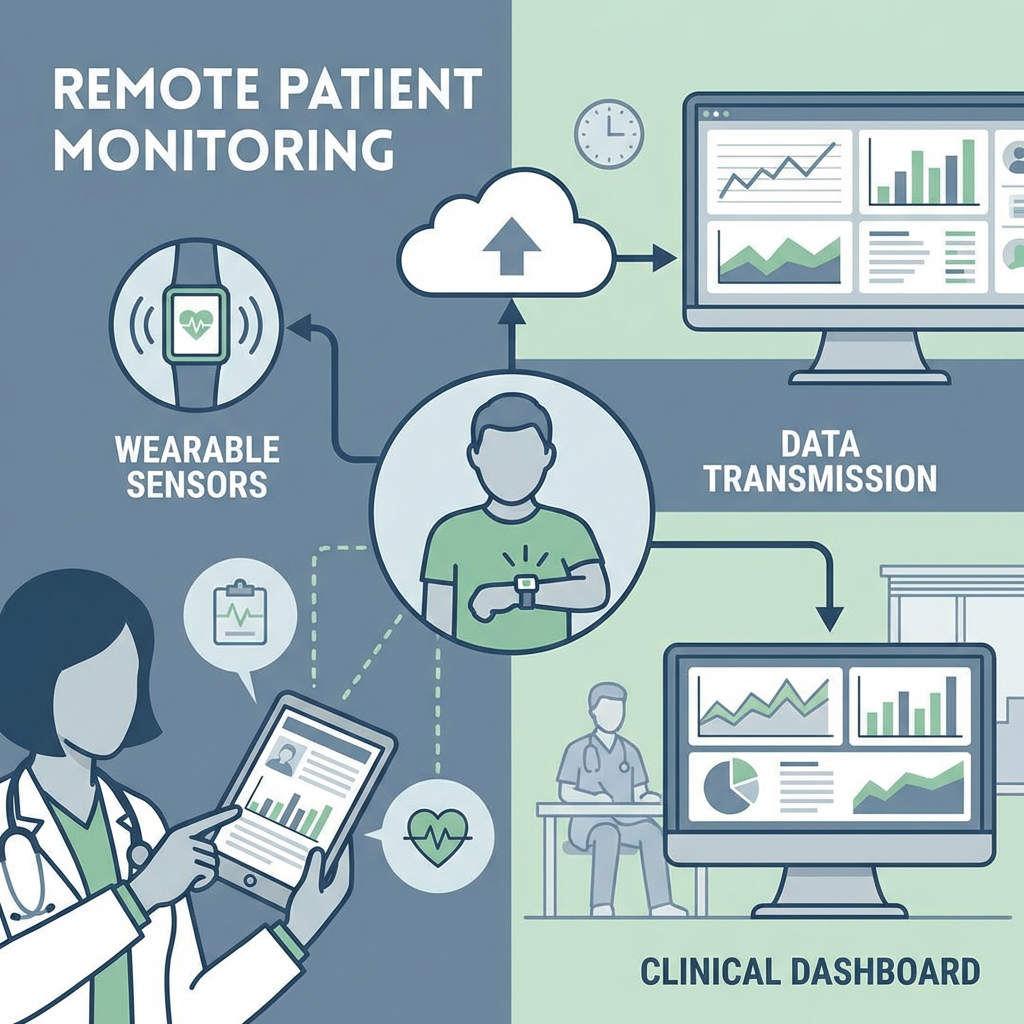
Robots will soon support:
- chronic disease monitoring
- medication adherence
- home rehabilitation
- elderly care assistance
This aligns with decentralised healthcare trends.
8.3 Soft Robotics and Biohybrid Systems
Soft robotic actuators mimic biological tissue behaviour, enabling:
- safer physical interaction
- improved prosthetic control
- delicate surgical manipulation
Biohybrid designs integrate living cells with robotic scaffolds—a new frontier.
8.4 Multi-Robot Ecosystems
Hospitals will adopt integrated robot fleets coordinating:
- surgery
- imaging
- supply handling
- sanitation
Shared data lakes will enable collaborative intelligence.
9. Conclusion: Robotics as a Core Pillar of Digital Healthcare
Robotics is no longer an auxiliary tool—it is a structural component of future healthcare systems.
As surgeons gain enhanced capabilities, rehabilitation becomes more personalised, diagnostics become more accurate, and hospitals become more automated, robotics emerges as the essential infrastructure for the next generation of healthcare delivery.
The trajectory is clear: human expertise + robotic precision will define the new clinical paradigm.
The healthcare of tomorrow will be safer, more efficient, and more patient-centric—powered by intelligent machines designed to elevate human capability.




Leave a Reply